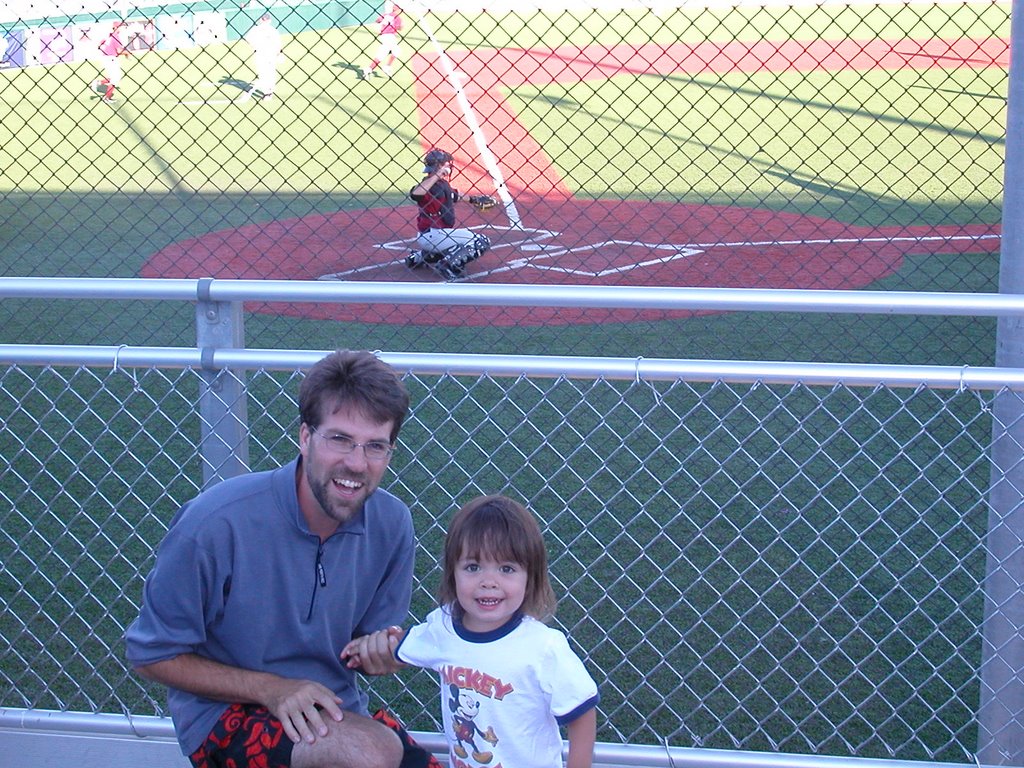
Over at the Greater Good blog,
Christine Carter McLaughlin and Kelly Corrigan continue their dialogue on childhood happiness, this time with a focus on social connections:
Kelly: So about connection. You know how there's this prevailing desire for space and privacy? People dream of a home with a long driveway on five acres but if and when they get there, it's too quiet, too isolated, too removed from the comforting sounds of a neighborhood. At least for me, the thing I like most about my home is seeing people walk by as I do my dishes or bumping into friends as I walk my kids to school.
Carter: This is what sociologists call social integration, and the upshot of all the research on it is that social connectedness is so closely related to well-being and personal happiness the two can practically be equated. Robert Putnam wrote a really interesting book, Bowling Alone, about how we Americans are becoming less and less connected to one another.
"Countless studies document the link between society and psyche [he writes]: people who have close friends and confidants, friendly neighbors, and supportive co-workers are less likely to experience sadness, loneliness, low self-esteem, and problems with eating and sleeping…The single most common finding from a half century's research on the correlates of life satisfaction, not only in the United States but around the world, is that happiness is best predicted by the breadth and depth of one's social connections (Putnam 2000, p. 332)."
Many people would love to have the kind of connections Putnam talks about, yet still find themselves living lives of lonely desperation. "Families are isolated," says
Carolyn Cowan, a research psychologist with the UC Berkeley Institute of Human Development (also my employer). With her husband Philip, Carolyn studied 200 nuclear families and found that up to a third experienced "tension, conflict, distress and divorce in the early years after the arrival of a first child," conditions that thrive in social isolation.
"Increasingly, new families are created far from grandparents, kin, and friends with babies the same age, leaving parents without the support of those who could share their experiences of the ups and downs of parenthood," write the Cowans. "Most modern parents bring babies home to isolated dwellings where their neighbors are strangers."
Sounds dire, yes? And probably familiar to many readers.
At the moment I'm working on a set of interlocking writing projects, all of which involve interviewing families with young kids, all in the Bay Area. I'm struck by two things: 1) how isolated many of them are; and 2) how differently individuals react to the isolation. One stay-at-home dad I interviewed knew that he was isolated, but he only worried that his son wasn't being properly socialized--he honestly didn't care that he had few parent friends (important caveat: he's only three months in to his stint as a SAHD). I've also talked with people who have what appear to be busy social lives--but they lament the
quality of their social contacts, which they feel lack the kind of intimacy they found in school-age friendships.
But what's most interesting is that many new parents seem to have
chosen lives that leave them isolated; for example, by moving away from parents and hometowns. Why? When I quiz people about this, the kneejerk response is that people in general are following jobs. But when I drill down and ask, "Why don't
you live in the place where you grew up?" I find the answers vary a great deal.
Some people did indeed follow jobs and careers. Others (this applies to me) grew up moving from place to place, and don't have any one town to call home--often, their relatives are dispersed. The most interesting group consists of people who came to the Bay Area seeking some degree of social freedom--this is true, for example, of many gays and lesbians. Here many such people discovered, for the first time in their lives, communities in which they were not the outsiders.
Then they had kids, and found themselves once again on the outside, but this time they were far away from family.
Last week my short story, "Same Street Twice" appeared in the literary magazine
Instant City. (Sorry, the story's not available online, but you can order the magazine at its website. You can also find
Instant City on sale in fine bookstores like Pegasus in Berkeley or Adobe in San Francisco. It's a publication well worth supporting.)
In the thinly fictionalized "Same Street Twice" I document the experience becoming a parent, but I also unconsciously dramatize the social trends I'm now writing about: our young urban couple, Rachel and Graham, find themselves saddled with a baby, far from family or friends, and uncertain of their new roles and responsibilities. They're surrounded by the raunchy street life of the Castro, but it comes to seem like a "slightly boring play" that they can only watch.
It had been a while since I read the story and there's something about seeing your work in print that makes it seem like it was written by someone else: this allows me to feel some degree of pity for the writer. I wrote "Same Street Twice" while in the thick of the experience being described, two and a half years ago. Reading it today, it seems to me that at certain points the story is about to collapse from exhaustion and anxiety.
Ah, so sad. But there's a yet-unwritten sequel: the young urban couple survive the experience of becoming parents. They meet other parents on the playground
who are exactly like them. They form playgroups; join community associations; rendezvous every Saturday at the neighborhood Farmer's Market; hold parties. They start helping each other out. Their kids get older and the kids become friends. The couple grows to accept their new identities and the limitations the identities impose, and they craft roles for themselves that make sense and seem fair. In the wreckage of their lives, they build new lives and create new social capital.
"Sure, kids'll destroy your life," someone once told me. "But don't worry: you'll get a new one."
This might also be the sequel to the Cowans's study, though happy endings are not as common as we'd wish. The happy ending (what is that anyway? a good death?) might even be the exception. Many of the couples they studied ended in divorce; many doubtless continue to struggle, even if they stay married. A great deal, I suspect, depends on geography, the community's existing social capital, and individual circumstances too numerous to mention.
If we're honest with ourselves, I think many of us will admit that we gain a certain amount of freedom in our modern isolation: it's part of the landscape of our lives and therefore we, tough little monkeys that we are, learn to love it. But I've discovered, slowly, that Christine and Kelly (and Putnam) are right: social connections are key to happiness, if happiness is something that we want.
Knowing that is small comfort to people who are lost in the city, or the suburbs, or anywhere. It's not so easy to find those connections, when a thousand obstacles, many of them self-imposed, some of them not, cut you off from your neighbors and co-workers and relatives--and community, once achieved, is by no means an unmixed blessing. But, you know, if you're struggling, all you can do is keep going. Don't stop. You're probably not as alone as you think you are.