 Today, the Whinydad Chronicles interviews me and Chicago Pop about Daddy Dialectic. You can find out all about the secret origin of Daddy Dialectic, the influence of our own fathers, what embarrasses our kids and how they influence our writing, what we've learned about fatherhood from blogging, and how to save the world from evil.
Showing posts with label Daddy Dialectic Background. Show all posts
Showing posts with label Daddy Dialectic Background. Show all posts
Saturday, March 15, 2008
Fun with Whinydad
Today, the Whinydad Chronicles interviews me and Chicago Pop about Daddy Dialectic. You can find out all about the secret origin of Daddy Dialectic, the influence of our own fathers, what embarrasses our kids and how they influence our writing, what we've learned about fatherhood from blogging, and how to save the world from evil.


Tuesday, October 09, 2007
Where we are writing from
 I've refrained from writing posts in this blog about this blog, because I can't imagine anyone would be interested in how I view it--I mean, what you see is what you get, yes?
 But lately I've been thinking about what I like and don't like about other blogs, especially blogs about gender, feminism, sexism, politics, and parenting--and especially blogs on those topics written by guys.
Some of these blogs are quite popular, which Daddy Dialectic isn't. We get about 200 unique visitors on a good day, 100 on an average day when no one has posted for a while, maybe 3,500 in a month. In contrast, the bigger parenting blogs--some of which are great--will get 30,000 visitors in a single day.
Since I have a background in magazine publishing, I think of our readership as being akin to that of a literary magazine and I'm pretty happy with it. The only promotion I've ever done is to tell friends, family, and bloggers whom I genuinely admire and who feel kindred in some way--you'll see some of them listed in the blogroll.
No one who writes for Daddy Dialectic writes a post because he thinks it will be a hit in the blogosphere and get lots of links. Instead, we write about changing diapers, Proust, imaginary friends, loneliness, feelings of empathy and compassion--that sort of thing. I also blog quite a bit about recent research into families. Nothing that will get us mentioned in DailyKos.
We avoid writing about Bush, abortion, the war, and so on. Those things are important, but our culture and the blogosphere is filled with angry arguments on political issues of every kind. We're writing from a quieter place.
As a corollary, we tend to avoid rhetorical posturing; it creeps in sometimes, of course, but in general, I think it's fair to say that Daddy Dialectic posts are rooted in either quotidian life or empirical evidence. I read a lot of "pro-feminist" guy-blogs that are deeply theoretical: there's a lot of arid talk about "privilege" and "oppression" and so forth that really doesn't speak to my actual life as a dad who is committed to equality and justice.
Part of that pro-feminist guy mindset involves a self-hating denial of the validity of their own experience, that oftentimes seems to lead to ideological passive-aggressiveness, where anything an opponent says is framed as a product of privilege or identity. This is the enemy of understanding ourselves and the world.
The entire basis of Daddy Dialectic is that the daily experience of caregiving dads is valid and even important, even--no, especially--with the contradictions that are embedded in our experience.
Men still have more social power than women. A great deal of that social power is derived from a gendered division of family labor. Therefore, part of the solution is to erase the division of labor. This entails men entering traditionally female realms, even as women have entered male realms. This brings about a conflict between protected female spaces and men who are actually quite vulnerable, though they might loathe to admit to being vulnerable. I'm talking about literal spaces--for example, moms' groups--but I'm also talking about psychic and cultural spaces.
In 100 years, scholars will use current-events-oriented blogs as mere footnotes, even if today they are getting half a million visitors a day. I strongly believe that blogs like Daddy Dialectic--or Doodaddy or Lesbian Dad--will be ones that future historians read closely. Their value lies in that they are documenting the individual, subjective experience of world-historical change, in the same way that letters and diaries did for earlier generations.
Perhaps that seems a trifle lofty and even self-important, but I don't care. It's not a statement of personal importance; it's a statement of how urgent it is that we speak honestly about our experiences, even when they seem to conflict with what we believe. We live our daily lives in the unhappy gap between real and ideal, experience and imagination. At Daddy Dialectic, that's where we're writing from.
Thursday, October 05, 2006
The Power of Magical Thinking
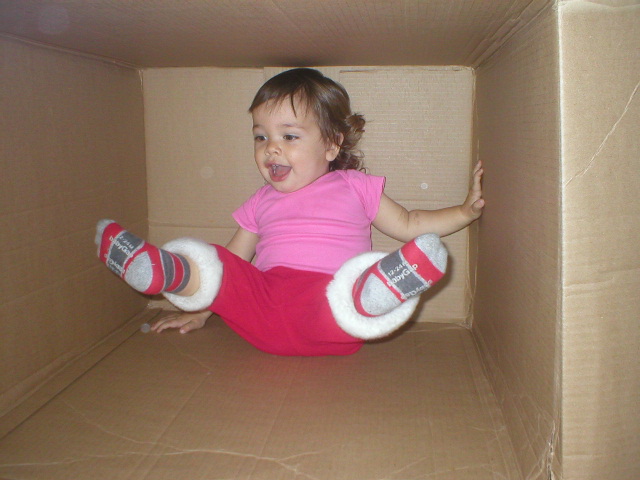
For the first year of my son’s life I was the sole means of support for our family. I worked at an independent media organization that by the time of Liko's birth had turned from a dynamic, innovative nonprofit into a failing business. With others I had fought against that direction, but in the end we were beaten. In dribs and drabs, my allies left.
In the summer of 2005 I joined them, depressed and humiliated by what I saw as a professional failure. I sent out a few desultory resumes, but it didn’t take long for me to realize that what I really wanted to do was spend more time with my son. Unfortunately, my wife’s job would not be enough to support the three of us. I knew that I would freelance and consult, but there were no guarantees. In the middle of anxiously sleepless nights, I envisioned us homeless, forced to live with relatives.
Despite our fears, we made the leap into being a “reverse traditional family.” Like many stay-at-home dads, I didn’t want to stay in the house all day. The minute my wife left for work, I’d take Liko out the door and onto the streets. Together we’d walk, moving from shop to restaurant to playground to bench to friends' living rooms and back to the playground, stepping into the flow of the city.
“Unfortunately, nature is very much a now-you-see-it, now-you-don’t affair,” writes Annie Dillard in her essay “Seeing.” This is equally true of cities. It is also true of parenting. They are worlds unto themselves, containers of consciousness, definers of perception; but we are never quite able to hold them in our senses. During these months of uncertainty, San Francisco seemed to constantly shift in and out of focus, and so did my son. The babble from Liko's mouth sharpened into words, the syllables flashing like sunlight on windows. We'd cross the street and on the other side, he'd seem suddenly older.
During these months of transition I found myself doing a funny thing (“found myself,” meaning that thought followed action; perhaps also meaning that I uncovered an aspect of my personality that I'd never seen before). I'd give away money to anyone who asked for it: five dollars to a beggar, one-hundred-and-fifty dollars to a canvasser for California Peace Action, a dollar to the barista who made my $1.40 espresso. Once I found a ten-dollar bill on the sidewalk; without thinking, I turned and gave it to the man behind me. (“Uh, thanks,” he said, and hustled away, maybe worried that I’d change my mind.) This went on for months, and only began to fade once I felt my freelance work was a going concern and the financial uncertainty had ended.
This week I started full-time at my new job, as managing editor of Greater Good magazine, a publication of the Center for the Development of Peace and Well-Being at UC Berkeley. This morning as I edited an article on homelessness and begging, I recalled the period of my life after I left my job, when I gave away hundreds of dollars to absolute strangers.
Why did I do that? It seems crazy, given the uncertainty we were facing. Though it might seem like I am bragging about my own generosity and martyrdom in writing about this, in fact this is the first time I’ve admitted it to anyone but Liko (who merely gurgled mysteriously whenever I gave away cash). My wife did hear about the donation to Peace Action; at the time she gave me a pained, disappointed look. I mumbled something about wanting to stop the Iraq war, which sounded pathetic even to me. In context, my actions seemed foolish and even self-destructive. I hid them like an alcoholic hides a bottle.
The comparison with alcoholism might be warranted. I was addicted to giving away money, with each donation like a hit of some drug that alleviated my burdens. In the instant I handed over the money, my anxiety over money vanished. I felt floating, free, above it all. Of course, in a minute I’d fall back to earth, but that just caused me to want another hit.
Obviously I was not motivated by spiritual love for humankind, though certainly such moments have come up to me from behind, scaring me half out of my wits with their imperious demands that I change my life. I told myself at times that I was just looking for good karma; on a semi-conscious level, I believed that by helping others, it would somehow make people more inclined to help my family and me. I felt that the world was accumulating some kind of debt to me, quite without its consent, and that when I needed it, I could go to the world and ask to be repaid.
(In the article I edited this morning, the author paraphrases and quotes Søren Kierkegaard: “Sure, he said, we think a person who is loved owes a debt of gratitude to the one who loves them. There is an expectation that it should be repaid in kind, on installment, ‘reminiscent,’ [Kierkegaard] says sarcastically, “of an actual bookkeeping arrangement.’ Instead, [Kierkegaard] turns the whole thing on its head: ‘No, the one who loves runs the debt; in feeling himself gripped by love, he feels this as being in an infinite debt. Amazing!’” Kierkegaard was never a parent, but he seems to have understood parenthood well enough.)
There’s a phrase for this: magical thinking. Maybe the magic worked. I got plenty of work as a freelancer and consultant, more than I could handle given my responsibilities as a dad. When I found out about the position at Greater Good, at first I didn’t even consider applying. I was happy having so much time with Liko, making my own hours and doing work I wanted to do. Why mess with success?
Though it fell upon me almost by accident, being a stay-at-home dad irrevocably changed by interests and direction – it might not be an exaggeration to say that it changed the very core of my being, whatever that is. But I picked up a copy of Greater Good and thought about its mission – to “highlight ground breaking scientific research into the roots of compassion and altruism” – in relation to my life and my writing, in which I had increasingly turned my attention to parenting and kids. I met with the staff, and they told me about how they were researching the childhood roots of adult happiness, trying to figure out how to foster pro-social emotions and behaviors, and challenging, on scientific grounds, worldviews that depict human nature as primarily sinful, dark, and violent.
At the same time, I heard about another job at Stanford; this time the attraction was a heap of money. I applied for both and both were offered to me. In the end I don’t think that I had any choice. The mission of Greater Good vastly outweighed the salary at Stanford. Once again, I gave away money, hopefully to someone who needed it more than we do. Once again disappointments and fears dissolved, and I felt some degree of freedom.
So here I am. I go to work in the morning and come home in the evening. Shelly stays home and takes care of Liko. We’re a traditional family again, though we don’t think of ourselves that way. A year ago it seemed like life had kicked me in the stomach; in fact it had given me a gift. For that I’m grateful.
Thursday, June 15, 2006
Introducing the Dialectical Daddies!
Today we become a group blog, a concept for which the Star Trek word "Borg" might apply.
Let me introduce my fellow Dialectical Daddies:
What is a Dialectical Daddy? It's the social dad, the dad as citizen of the world. It's a dad who loves his kids enough to work for a more just and sustainable society, a place where all children can grow up free, fed, and cared for. A Dialectical Daddy faces contradictions but never stops trying to resolve them. A Dialectical Daddy knows that if women are free, he'll also be free. He never stops trying to live the life he's imagined, consistent with his values and hopes. A Dialectical Daddy tries to be conscious of the impact of his decisions on the world and on the future in which his children will live.
That, anyway, with an awkward degree of grandiose hand-waving, is the ideal Daddy Dialectic tries to promote. Welcome dads!
Let me introduce my fellow Dialectical Daddies:
Gopal is a friend and colleague in the Bay Area media justice movement; we both serve on the Board of Media Alliance. He's also a sharp political observer and a stay-at-home dad in a communal home.
Chris is also a friend in so-called "real life." At one time he was - this is unbelievable to me now - the only dad my age that I knew in San Francisco. Chris is also a teacher, activist, rocker, and baker of cupcakes for his 3-year-old Cole.
Tom is also a teacher and activist who publishes the 'zine Rad Dad, whose perspective I value.
Chip is an experienced blogger and the father of teenagers. Though he's the only daddy I don't personally know, in his blog I found a progressive who fearlessly tracks his experience against his values and politics - a kindred spirit and a true Dialectical Daddy!
What is a Dialectical Daddy? It's the social dad, the dad as citizen of the world. It's a dad who loves his kids enough to work for a more just and sustainable society, a place where all children can grow up free, fed, and cared for. A Dialectical Daddy faces contradictions but never stops trying to resolve them. A Dialectical Daddy knows that if women are free, he'll also be free. He never stops trying to live the life he's imagined, consistent with his values and hopes. A Dialectical Daddy tries to be conscious of the impact of his decisions on the world and on the future in which his children will live.
That, anyway, with an awkward degree of grandiose hand-waving, is the ideal Daddy Dialectic tries to promote. Welcome dads!
Saturday, May 27, 2006
Anne Lamott vs. Her Critics
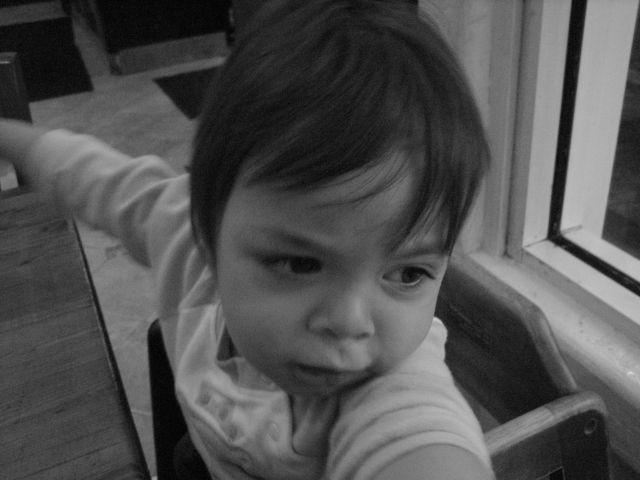
Anne Lamott isn't the kind of writer whom I ordinarily like; I prefer gloomy European eggheads. But during the first few weeks of Liko’s life, Shelly and I took turns reading aloud Lamott's classic memoir Operating Instructions: A Journal of My Son’s First Year, which we found to be hilarious and helpful.
Since then I’ve taken to reading her columns in Salon.com and I’ve really started to like the woman. It’s worth noting that Lamott does seem to be a little bit of a high-maintenance loon, but her writing is so amusingly human and relentlessly honest that I (for one) am willing to take her as she comes.
On May 22 she published a column in Salon detailing an “ugly and insane” confrontation with her now-17-year-old son Sam. Rather than quoting, I’ll let you read it. Sufficed to say that the column is full of anguish and pain at her son’s bad attitude and the turn their relationship has taken in his teenage years, and pivots on a slap Lamott delivers in a moment of weakness. It’s a common story – I was Sam, once upon a time, maybe even a little bit worse – and Lamott tells her side as candidly as she can. She doesn’t make herself look good, either. That’s part of the point.
The column provoked (at this writing) nearly 400 comments from Salon readers, many of them sanctimonious (“it takes a lot of something -- hell knows what -- to slap another person in the face”), laughably misguided (“what would people be saying if he’d been the one who slapped her in the face?”), self-righteous (“you’re a beater”), and sometimes even misogynist (“someone really needs to take this cupcake out behind the shed and slap her around”). Other Salon readers ably rebutted the worst comments, so I won’t add to the chorus.
But here’s what most struck a nerve with me: many commentators also condemned Lamott for writing at all about her son. “Lamott… has made a habit of cannibalizing her son's life for profit,” writes one person. “Violating your son's privacy by sharing this story here is a bigger mistake,” writes another, “and one that I don't think I would have EVER forgiven my parents for had they ever written about my foolish adolescent misdeeds in a public forum read by millions of readers.”
Since starting Daddy Dialectic in March, I’ve received two emails from people who called the blog “exploitative” for writing about my experience taking care of Liko; my critics even seem to be under the impression that I write Daddy Dialectic for some kind of financial gain. To which I reply: Ha! You have no idea what you’re talking about.
And so my first instinct was to side with Lamott; the first draft of this blog entry consisted of a defense of Lamott’s right and even duty to write honestly about her experience as a single mom.
However, in the process I thought a great deal about the limits, real and potential, that I impose on what I share and don’t share in Daddy Dialectic. Liko is still a toddler and so there is nothing I can write here that will reverberate in his social and emotional life; he’s just a little guy with little-guy problems, like learning to sleep through the night. The point of the blog is to document my own responses as a primary caregiver and think politically about my experience, based on the assumption that a dad-at-home is still a relatively new social phenomenon and therefore worth writing about.
However, there is a gigantic no-fly zone in Daddy Dialectic: my wife Shelly, who seldom appears except in passing. The reason is simple: she doesn’t want me writing about her. She and I have never discussed this, but after 14 years together, I instinctively understand that Shelly doesn’t want me talking about her or our relationship in any depth with a bunch of strangers, or even with friends.
And so you’ll never read in Daddy Dialectic about an argument we just had and any of my petty dissatisfactions as a husband. If, God forbid, one of us slapped the other in a moment of rage, you, dear reader, will just never hear about it. And I think that as Liko grows older, you’re probably not going to hear about our most painful growing-up moments. (There are, incidentally, ways to write about parenting in the teenage years that are respectful and appropriately distant. See, for example, the Daddychip blog.)
In the end, I guess I have to agree with some of Lamott’s more thoughtful critics, that in writing about an altercation with her teenage son, she might have showed poor judgment.
But here’s the thing: anything I write about my relationships with my wife and son, or any member of my family, is between me and them. Reading about one isolated incident in the life of a family is not license for the reader to judge an entire person or entire relationship, the way Lamott’s critics have done. Lamott showed courage in writing so frankly about her experience, and that should be honored even as we politely question her judgment.
Writers who share and explore their experiences perform a socially necessary task that our society rewards in various ways, through pay and prestige. It’s hypocritical to read Lamott’s writing and derive meaning from it, and then turn around and criticize her for writing at all. Lamott might (we’re not in a position to know for sure) have damaged her son and her relationship with her son by writing about their life together, but it can be simultaneously true that the column is useful to us as readers. Certainly, as the father of a future teenager, I read it very carefully, as a warning. For that, Lamott has my respect and gratitude.
-------------------------
One last, different note. Like many of you, this morning I read details of the latest massacre in Iraq perpetrated by American troops: “The 24 Iraqi civilians slain on Nov. 19 included children and women who were trying to shield them, witnesses told a Washington Post correspondent in Haditha this week and U.S. investigators said in Washington. The girls killed inside Khafif's house were ages 14, 10, 5, 3 and 1, according to death certificates.”
Imagine, right now, soldiers kicking down your door and murdering your children before your eyes. All of us as American taxpayers helped murder those girls; we paid for the guns. Wherever you are and whatever the circumstances of your life, do what you can to speak out against the war. It has to stop.
Thursday, March 16, 2006
Jeremy vs. The Name of His Blog

Attentive readers - both of you - will have noticed that I have changed the name of my blog at least three times. As a consequence of my indecision - and that's all it is, pure and simple - the name appears differently on different parts of the Web.
Well, I'd like to announce that the final, final, final name is now "Daddy Dialectic: The Political Journal of a Dad-at-Home."
What the heck is dialectics? Let me quote from "What the Heck is Dialectics?", which happened to be the first page I found in a google search:
Dialectics is a tool to understand the way things are and the way things change. Understanding dialectics is as easy as 1 - 2 - 3.
One--Every thing (every object and every process) is made of opposing forces/opposing sides.
Two--Gradual changes lead to turning points, where one opposite overcomes the other.
Three--Change moves in spirals, not circles.
Dialectics is closely associated with Karl Marx (though it really started with Hegel, Heraclitus, and Lao-Tzu), but I'm not a marxist. I'm a leftist, but not a marxist. Really, I'm not. I call my blog "Daddy Dialectic" because my life really does feel dialectical right now, with many incremental changes leading to a turning point where opposites are overcoming each other and everything is spiraling around me and I myself am spiraling. As you can see in the photo, Liko is also spiraling. We're all of us spinning around! Whee! It's poetically true, you see, though politically distracting. So, uh, welcome to "Daddy Dialectic"!
(A bit slaphappy today, as attentive readers might have noticed. A paranthetical note: In setting up the link above, I googled an essay I wrote on the Communist Manifesto for Dollars and Sense magazine way back in the futuristic year 1999 -- some of you might recall 1999 as the last year of civilization, before the Y2K crash plunged us all into a barbaric age from which we have yet to recover. Anyway, I discovered that the essay retails on Amazon for $5.95. I had no idea. Wonder if anybody's ever bought it? I certainly haven't seen a dime. Next question: I wonder how many digital versions of my work are out there getting bought and sold without my knowledge or financial gain?)
Friday, March 03, 2006
Welcome to the new dialectics of daddyhood
 Being a dad ain't what it used to be. Women have more choices than they did prior to the feminist movement, and that means men also have more choices. My name is Jeremy. I'm a writer and publishing consultant, but mostly, I take care of my 19-month-old son Liko. It started in July, when I quit the job that I hated and started a freelancing career. Friends had suggested that I should write about being a mostly stay-at-home dad. Until last week, I always said, No, I’m not going to write about being a dad; not yet, anyway.
 But recently I surprised myself by posting a blog entry to Other Magazine about it, and I realized that I was ready to start writing and thinking about fatherhood, and maybe help other dads in the process. This is what I wrote, which I'm sharing as the first entry in my new blog:
Here’s the thing: I don’t think I deserve a medal and I don’t think every dad should do what I’m doing. Not everyone can. We’re lucky – it’s all relative – that my wife’s job has solid benefits and that I can still make enough money as a freelancer to pay our $1,800 rent (in San Francisco $1,800 gets you a one-and-a-half bedroom apartment with a deck). Yes, I read newspapers and I’m aware that I’m supposedly part of a trend. “The number of stay-at-home dads almost doubled from 1994 to 2004 – from 76,000 to 147,000 – according to the U.S. Census,” says a Feb. 22 article in the Contra Costa Times. But let’s put that in perspective: 147,000 is nothing compared to the millions – billions, if you look worldwide – of women who defer careers, hobbies, adventures, and sex lives to take care of a legion of children. Even in liberal, genderfucking San Francisco, I’m still usually the only dad in Liko’s music and swim classes, and usually the only one of the playground before 5 pm. Yes, I quit my job and powered down my so-called career so that I could take care of my son. I did it because I wanted to, not to be somebody’s role model.
And you know what? – I’m addressing you gentlemen, in particular: I’ve given up a lot, many things besides just a job. I don’t write stories and poems and essays like I used to; I no longer organize readings and fundraisers; my social circle has shrunk significantly. I don’t go to movies. I usually rise at around 5 am – I work in the mornings, and I make enough money as a freelancer to have my own office – and sometimes, when it’s still dark and I’m standing in line for coffee, I can feel my old life twitching like a phantom limb. I want to jump out of line and go running back to 2003, when I could just decide that today, I’m going to sit in a café and read, and then later, I’m going to see a movie, and then after that, I’ll go to the Make-Out Room and get drunk with my friends. Today in 2006 I’m just tired all the time. When I have a free moment, I do the dishes.
Does anything I just wrote mean that parenthood and staying home with Liko is a drag? Do I feel sorry for myself? Fuck no. I’m not a good enough writer to tell you how holding him makes me feel; let’s just say it feels good. When we’re blasting Yo La Tengo or the Strokes or Blondie (his favorites; he has a thing for punk, new wave, indie pop, etc.; anything that bounces, really) and I’m dancing and he’s careening down the hall, arms flailing, hopping from one foot to the other, and then he runs up and hugs my leg and yells “Dada!” – life can’t get any better. Nobody gives a shit about my poems anyway; the world can live without my stories. Most movies suck. From where I stand in 2006, the Jeremy of 2003 looks like an emotionally parsimonious, spiritually puerile wanker. I helped make a new life, and that’s staggering: a new human being, and a new life for me. I don’t want to give him to a nanny; I want to take care of him and see him grow. I wish I were with him now. Writing this, I feel like I’m stealing time from him.
It’s probably impossible – and there’s no shame in this – for a non-parent to understand the Heaven and Hell of being a parent. It’s a whole cosmos unto itself, ruled by Satan on one side and Jehovah on the other, and you never quite feel whole – or at least, I don’t. There are two of me now, one who yearns for freedom and the other who wants nothing more than to be chained to my drooling, pooping, cuddly little boy. I’m still new at this, still in the process of being transformed in ways both bad and good; maybe in time I’ll grow up and the two sides will merge into a whole person. More likely, judging from the patterns I’ve seen in my family and in older parents, it’ll be a seesaw, with one side and then the other getting heavier, lighter, heavier, wishing, accepting, wishing. And when he’s gone and can take care of himself, who will I be? Well, I’ll let you know when I get there. Humans have been raising kids and facing life cycles since we came down from the trees, but I’ve got a lot more going for me than my flea-bitten, ant-eating ancestors on the African savannah. I’ve had more choices than most people have in the world – certainly more choices than most women have ever had.
Where was I? Right: I’m supposed to be a trend, according to the Contra Costa Times. Well, it’s a pretty small fucking trend and I guess that I’m not interested in making it any bigger – or maybe I should say, I don’t feel I have the authority to tell anyone how they should structure their family life. I just want to get through to the end of the day. Parenting is brutally hard and wonderful work and it’s not for everybody; most men in our society will resist making the sacrifices involved with staying home – and why shouldn’t they resist, really? What’s in it for them? To be seen as a heroic pioneer? Fuck that. Why, for that matter, should moms be pushed into working so that the guy can stay home? Moms are never interviewed in these trend stories – how do they feel about it? (Maybe that’s the story I should write.) Why, now that I think about it, should anybody be forced to work a 50-hour week at a job they hate? Dads-at-home will be a tiny minority for as long as parents have to scramble to keep their heads above water, trying to make enough money to survive and give their kids the best life possible, under the circumstances. If Americans – we fat, rich, selfish, sadistic, TV-watching bastards – really wanted to encourage stable families and more paternal responsibility in raising kids, we’d raise our boys to be caregivers, guarantee health care for everyone, build more affordable housing, and require and incentivize employers to give all new parents, poor and middle-class, a break. Until all that happens, don’t talk to me about trends.
--------------
Since I published that entry, I’ve heard from quite a few people (in other blogs, through email, and on the Other forum) and they’ve made me conscious of its impact. When I wrote what I wrote, I made a deliberate decision to shut off my rational, responsible filter and just say what I felt. After I published it, I realized (everybody but me will have seen this) that the very act of describing my experience in a public forum made me an example, and that example could encourage (or discourage!) other dads to consider, circumstances permitting, taking on more childcare and even re-structuring their work lives to stay at home. That would be a good thing – a little bit like SNCC sending a handful of Ivy League white kids down to Mississippi to work beside black folks and get shot at by the KKK. That relatively small number of white kids said “Holy shit!” and ran back to their dorms and helped other white kids see the system for what it was, and act to change it – hence, “The Sixties.” Maybe if enough men – it won’t be many – come back from changing diapers and say, OK, things have to change, then maybe that will trigger the change. I know the priveleged classes can do wonderful things when they’re appropriately freaked.
However, in writing about my experience I don't want to water it down and deploy a lot of flowery language about discovering your feminine, nurturing side, blah, blah, blah. I’m not interested in making parenthood or staying at home attractive for men, or women, for that matter. This blog is not an advertisement for parenthood or for stay-at-home-dads. Parenthood is what it is; you are who you are; you'll make the best decision for you. Maybe I have to accept that I am an example, but I don’t blame any woman or man for making different decisions. I've decided to start this blog to publicly chronicle my efforts to be a decent father and husband, and do something that not many men have tried to do. Let this first message serve as a half-assed, anxious manifesto. Welcome to Daddy Dialectic!
Subscribe to:
Posts (Atom)